Locust Valley Lockjaw

by James A. Avitabile

Thank God ‘Mama Don’ was in my life. He knew what I was going through with my mother. It was so different for him. His parents were Irish immigrants who never talked to each other. Sheila stayed at home while Pat delivered the mail. They then sat silently in overstuffed club chairs in their Bronx living room and read for hours. Words came from a page and not from their mouths. Donald was a good student so they let him do what he wanted.

I was a good student too but I couldn’t do what I wanted. I was the son of Italian immigrants. My mother had a tough time conceiving me. She suffered five miscarriages before I was born on Father’s Day. She held onto me tightly. She didn’t want to lose me as she had with the others. My father was hard of hearing and couldn’t read. My mother had to yell to get through to him. He worked hard as a hat cleaner. Until I was eight, my mother raised two children: my father and me. I didn’t think he was any different than other fathers until I went to school.

That’s when I saw how fathers took an active part in their children’s education but my father couldn’t. I dreaded Father’s Night when students honored their fathers. My father never attended. How could he? The fathers would find him strange. I was ashamed of what my schoolmates would think about me if they met him. My mother couldn’t accompany him to be his interpreter. She had to stay at home to take care of my baby sister who was eight years younger than I. I felt like an orphan on Father’s Night. When I was in the third grade I began to realize that he would always be in the background of my life. He deferred any arguments I had to ‘our’ mother for resolution. He was soft. She knew it and used it against us both.

“Daddy, mommy won’t let me go to the movies with Johnny. Can’t I go? Please, daddy, please?”
“What does mommy say? If mommy says no, then no.”
I loved him and hated him. He was my mother’s puppet. He couldn’t talk and he couldn’t teach. I began to search for that someone who could.

I met Mama Don as Donald the first week I got to Cornell. When I first met him he was dictating a recipe for sweet and sour meat loaf to an eager and plump female graduate student. “You’ll love it Peggy. I guarantee it.” That was the first hint for me that he might be a member of the ‘committee’. It was the 60’s and he was more comfortable in being accepted as a straight man. He locked his gay secret in a closet that only came out in the dark anonymous rambles of Central Park. I was more comfortable with who I was. I used my closets for clothes not secrets.

At first sight he was just a Black Irishman’s face in the crowd. Over six feet tall, he rose above it. His eyes were chards of gleaming obsidian and his skin the color and feel of kneaded semolina dough. His black kinky hair was cropped short and looked glued to his head. He wore second hand tweed jackets that were broken in but not broken down. He could hand knot a bowtie with studied imperfection to make it look like a hasty afterthought. He shed his unacceptable Bronx accent and eased into a ‘Locust Valley Lockjaw’ with its ponderously slow cadence and mumbled elision of words. Mama Don had given me a ‘stage name’ too.

“They don’t want ‘Bronx Irish’ Ceil, they want Wasp. Mama will teach you.”

He was a good teacher who made it a fun game. We laughed along the way. Gradually, I became fluent in this new acceptable language where I could even pronounce both t’s in bottle. My jaw wasn’t as ‘locked’ as his.

It was never sexual between us. He led and I wanted to follow. He was a ‘grounded’ gay man with goals. He was my pattern maker and not my missing father. In Ithaca he introduced me to buying Brooks Brothers at thrift shops and twenty-five cent sumptuous, homemade Saturday night church suppers where members of depleting congregations were trying to rebuild their flock by tempting us with delicious bait.

“How about seconds of that brisket and maybe another piece of apple pie or the cherry cobbler or both?” Unfortunately for them, they filled my stomach but not my soul.

At Cornell, we lived well with little money and a lot of imagination and had a lot of fun along the way. Through Mama Don, I became part of a family of gay men who were focused on making something of themselves. And during that summer of ’67, I migrated with him to a rental cottage in East Hampton: a place I had once thought I could never belong. Mama Don was there to dare me to let go of my insecurities and to accept that I was a hat cleaner’s son.

“You’re like Mama, Ceil. We did it. We came from there and we’re here now. Let it go!”

I did.

He died at 46. The fable was that he ate contaminated salad greens that grew in human feces on the slopes beneath the Parthenon.

Thank you, Dr. ‘O’ for encouraging me to apply for admission to the IRP Program. I dedicate this piece to you and ‘Mama’.
A Day at Sea

by Bob Ashton

I wake from a deep and much needed sleep. A rocking motion reminds me that I’m sailing well out to sea. It’s light. I’d go back to sleep but my crew is on watch, has been for hours and I must replace him. I know his mood – sleepy, eager for relief. I know. I’ve been there. But I’ve a couple of minutes to reflect. The motion is delightful. I’m wedged in the “V” between the mattress and bulkhead, a position long perfected to minimize my body rolling. Eyes closed, I review the sounds. Primary is the rushing of water past my ear only inches away through the fiberglass hull. The boat is moving well, good. Then the chirp, chirp of the gears in ‘Harvey,’ the autopilot I named for the invisible rabbit of movie and Broadway fame. (He’s an electronic box, steers the boat most of the time – relieving us humans of that drudgery.) All is well. Have to get up. I’ll get a nap later.

I pull myself out of the bunk, put on shorts and a tee shirt. Don’t need shoes yet. I’ll get them if the motion or weather picks up. With two feet on the sole (floor) and one hand for balance, I reach for the coffee pot lashed each night on the stove and pour a mug full. Mug goes up on deck so I have two hands for the ladder as I climb to topsides. I’m first greeted with the early sun. Warming – not hot – yet. Next, the morning breeze, cool, bracing – so far.

I’m on a long distance sail between the Galapagos and Marquesas Islands, hundreds of miles from any land, just where I want to be. I’m roughly halfway across the longest open water leg of what I’m hoping will turn into a sail around the world, the dream of many sailors. Will I make it? Some challenges I’ve overcome—heavy weather, equipment failure— and I know there will be lots ahead. Always in the back of my mind. A quick look around reveals the light blue of the tropical sea set off by white caps. The sky and clouds compliment. It’s all that trade wind sailing should be. The trade winds blow East to West. So, since sailing with the wind is easier than against it, circumnavigators go the same way. It also happens to be an area of normally great weather.

After a brief chat, the crew (there are just two of us on this leg), eagerly awaiting my relief (rather than my companionship) dives below for a quick bite and bunk time. This is my favorite part of the day. I take a seat near the helm but no need to touch it. Harvey is doing a fine job. I can see most of the horizon and the instruments confirming speed and direction. Harvey’s control, a simple dial I can turn with two fingers, is an easy reach. The boat is moving well. No traffic on the horizon. The sounds of the water and wind speak of energy, the great horsepower that I can control so easily.

I don my safety harness and clip to the jack lines for my daily inspection around the deck. I find three flying fish bodies; they flew to escape a predator, only to find my vessel’s deck. Too bad they’re inedible. The jack lines have no evidence of chafe or wear. No problems.

I settle back in the cockpit and take in the scene. There is so much I find appealing. The sea has its own fascination. The white of the white caps seem the perfect contrast to the ocean blue. In these weather conditions, the fair weather cumulous clouds similarly compliment the sky. No human artist could improve it. For awhile I need no other entertainment.

My crew below and asleep, my company is birds. The kittiwake, booby, even a rare condor wander past. Evolution provides them with the tools to survive here, to navigate, find food. I need so much technology I feel embarrassed to be invading their property. I overcome it but muse on what awesome abilities they have we so little comprehend. During these moments I can understand the appeal for the single hander, this feeling of total control, self sufficiency. But the likelihood of bad weather, fatigue, injury or gear and safety problems dims the appeal for me. Besides, I like company.

I try to read. But nature seems to make concentration difficult. I’m drawn to the slightest change, noise. If the wind changes I may need to adjust a sail. If it increases, I may need to reef. I have to glance around the horizon every few minutes to watch for traffic. It’s not demanding but it is absorbing. I hear the gasp of a dolphin going past the cockpit on his way to the bow. I have to go up and attempt communication. Dolphins seem fascinated by the bow. Why? I’ve never heard an explanation.

The morning goes on. Eventually my crew reappears. A chat is now welcome. A vessel breaks the horizon. We track its angle from us. Its bearing changes in a few minutes. No collision likely, and soon it’s gone.

There are some chores. Each day someone sweeps the floor below. Sink is draining slowly, need to clean the trap. Light bulb burned out. (Amazing how many different bulbs a boat has and we have to have spares for all.)  Time for the “net” when boats on roughly the same path, within radio range, which is several hundred miles, agree to contact each other once each day. It’s the daily comfort that there are others ‘out there’ with advice or help if necessary. We go days without seeing anyone – the essence of solitude—yet today some forty voices respond sequentially. “Any emergencies?” Not today. Just brief chats on weather or current wherever the voice is located.

Evening arrives and dinner. My crew happens to be a great fisherman. He pulls some two to three foot morsel over the rail every few days. Fresh fish of many sorts decorate our table. Tonight there’s relatively manageable motion, and we decide to have a glass of wine. This is a no-no for some sailors; one glass won’t hurt us. We’re hungry, and though many parts of dinner came out of a can, it’s delicious.

Dinner often occurred about sundown. I had rigged a light in the cockpit which permitted eating after dark but had the effect of shutting out the world beyond the boat. We regularly watched for lights, of course. Dinner over, I was generally the washer. I had my way of using minimum fresh water. Now began the night watches. Whoever was ‘on’ the afternoon got the first watch off, to be roused later for the next.

Many have written of the thrill of night watches, the thrill of a clear sky so seldom observed by city dwellers; or punctuated by meteors has its reward. It’s easy to stare at the spectacle for some time. After ten or twenty or more, the night watch is little more than hard work. I’ll miss sailing but not the long night watches. With normal sleep cycles long destroyed, the dark of night still urges sleep. I’ve spent many an hour pinching, slapping, anything to keep awake ‘til relieved.

Tonight, I’m off watch after dinner so right to bed. About 10 p.m. I’m awakened with a shout, “Wind’s up, raining. Need to reef.” I have to get up and help. Routine, but now, reef in, it’s back to sleep. As I drop off I grin to myself of friends back home who would never understand why I’m doing this, why I really like it. And this is the easy part. On past legs there were torrential rains, calms, reefs to spot, islands to find or avoid. All this mixed with heavy weather made for scary moments or hours. There will be more such trials ahead, but I wouldn’t miss it for the world. Tonight I have the 3 a.m. watch. The impending pain of the time in the dark penetrates as crew shakes my shoulder. I struggle up, pour some coffee and take my place in the cockpit. Glancing around, all is in order, sailing well but nothing to do. Keep eyes open. Watch for lights, any wind changes. I make occasional adjustments to sail set or direction. Still little to do. Will dawn ever come? Seems eons away. Hang in there.

Finally! A hint of light in the East! There is an end. As the world gradually emerges from blackness my whole mood changes. Soon, some deep red color adds to the gray. Then more. It seems to be both agonizingly slow yet dramatically fast. Soon, deep reds go to pink. (In the Hollywood version will there be trombones?) Then white. (Trumpets?) An edge of the sun itself peaks over the horizon. Day has arrived. The agonies of the night watch are over, forgotten. The joy of the whole picture emerges, from watching the sea move by, to the excitement of approaching lands, to sharing with friends—all alleviate the trials.

I love this life – where I am. I couldn’t be happier.

Robert Ashton is trained as a Mechanical Engineer. On retirement, he purchased forty foot sailboat and sailed around the world. Resulting book actually sells. This piece attempts some emotional details – lacking in the book.

Will We Ever Know?

by Tom Ashley

“Hi, Tom, may I sit down?”

It was 1996 and Roy Gricar and I were back at our prep school, Gilmour Academy, for our 35th reunion. I had been diligent about returning to Gilmour every five years, and this particular year I had made the trip from London just for the event. The place meant a lot to me, having been a refuge and safe haven from my chaotic childhood home and abusive father. But Gricar had not had the same dedication; this was his first time back and the first time I saw him since we graduated.

I wasn’t close to him when we were classmates. Even in our small class of forty-nine there was a fundamental difference between day students and us boarders. Boarders lived under the same roof, took meals together, and gathered in the lounge in the evening. We were a tight group. Roy, a day student, wasn’t in the group and I had little interaction with him.

But now, decades later and in the place where we met, Roy and I had a few drinks and conversation became easy. He knew that I was in the television business and asked if I knew his college classmate, Don Novello, one of the comedic geniuses of the medium. I didn’t know him, but of course I knew about him. Roy and I discussed him for much of the evening.

Eventually we said goodnight and exchanged business cards. Roy said, “I see you now live in London,” and we went our separate ways.

A year later my phone rang. It was Roy. “Tom, I’m going to be in London in two weeks,” he said. “Can we get together?” We arranged that he and his wife Carol would come to the flat where I lived with my girlfriend and that we’d have dinner together there.

Roy and Carol arrived on time and we had a nice meal with several bottles of Bordeaux. At one point in the evening, Roy pulled me aside and asked if we could speak privately. He had seemed jumpy and slightly (or not so slightly) nervous. We stepped outside into the garden. He then told me his story.

“My job is Civilian Approval Expenditure Manager for Wright Patterson Air Force Base in Dayton, Ohio.” My eyes widened. We had all read stories about the continuing scandals of the military’s needless expenditures for $350 hammers and useless equipment, and overbilling and overpaying practices. I was primed for listening to a secret.

Gricar told me about an action he had recently taken regarding a contract for the maintenance of Air Force jet engine cargo planes. This new contract, which cost substantially less money than the previous one, actually provided very little necessary service. In the past, in order to check the bolts holding the engine in place, the service engineers had been required to remove the engine entirely and bring it down to floor level. There the engine and the bolts would be examined and tested. But the new contract made no such requirement. Now maintenance crews could simply take the service platform up to the engine and check the bolts from there. Roy felt that was an unsafe and incorrect procedure, and in the report he filed he said so and refused to sign off on the contract.

Not long afterward, Roy said, a cargo jet crashed, killing all crew members. He immediately went back to check his files on the plane maintenance orders and recommendations. But they, along with his computer, were gone. Roy went to tell the top commanding officer at the base, but not one of the officers would speak with him about the crash. He then stopped to think and decided it would be unsafe if he went higher up in the military or even to the local police. “Tom, I’m a wreck. What do you think I should do? I feel my life is in danger.”

I was stunned. Thinking of television journalists who do a thorough investigation if they decide to pursue a story I suggested he call two producers I knew—one at Public Broadcasting’s News Hour and the other at CBS’s 60 Minutes—and I gave him their names and offered to call them if he wished me to do so. He said he’d get back to me, thanked me and left with his wife. I never heard from Roy again.

A year after that dinner, one of my classmates, Bill Crookson, called to tell me that Roy Gricar was dead. It had been called a suicide. Apparently he had leapt from a bridge over the Greater Miami River near his home in Dayton. My thoughts ranged from shock and disbelief to shock and belief.

I called Roy’s wife to express my condolences. I wondered aloud about my conversation with him a few months earlier. “Tom, there was no truth to that,” she said. “Roy was bi-polar and hugely depressed. He lost his job and felt he couldn’t go on living. Our family wants peace now.” I respected that wish, but her attitude didn’t make sense. I remained an ocean away in London but continued to brood about what really might have happened and why Roy had told me his story.

Nine years later, in 2005, another classmate of mine, Charles Murray, called. He told me that Ray Gricar, Roy’s brother, who had also been at Gilmour and was the District Attorney of Centre County (home to Penn State University) had disappeared. I didn’t then make any connection to Roy, but it did have a disquieting effect on me.

On December 16, 2011, I was watching the Today Show on NBC, which had a segment promoting that evening’s telecast of Dateline.The story was about the Penn State scandal—Jerry Sandusky’s pedophile crimes. It included the report that former District Attorney Ray Gricar, by this time pronounced legally dead as no remains or whereabouts could be found, had had sufficient evidence to prosecute Sandusky many years back but had failed to do so. The Dateline reporter, Lester Holt, interviewed Roy’s son and Ray’s nephew, Tony Gricar. They discussed the strange similarities between the brothers’ fates but failed to make any connection even after it was noted that D.A. Gricar’s computer had also gone missing, when he did. His computer and hard drive had washed up on the shore of the Susquehanna River months later too badly damaged for information to be retrievable.

I figure that my classmate Roy Gricar must have told his brother about the Wright Patterson Base issue. I continue to have many unanswered questions about a connection between one brother’s death by “suicide” and the other’s by “disappearance.” Ray Gricar’s failure to prosecute Jerry Sandusky in 1998, when he seemingly had enough evidence, is deeply upsetting, too. Sandusky was not sent to prison until 2012, over fourteen years after an act of child molestation on his part was witnessed.

Just recently the Pennsylvania State Police Department has reopened the case of Ray Gricar’s disappearance. NBC will follow the story as well. I am in contact with the network and with Patrick James, a former cable executive who now runs a website and blog seeking truth and justice.

Will we ever know the truth? Some crimes are never solved. I am left with a feeling of uneasiness. Many lives have been changed forever. Why?

After a lifetime in broadcasting I felt the urge to write. I have my IRP coordinators and classmates to thank for guiding me down this stimulating path. I’m forever grateful.

Masthead 2013

VOICES: FALL-WINTER 2013

Tom Ashley, Publisher
Lynne Schmelter-Davis, Associate Publisher
Charles Troob, Associate Editor

Prose Editors:
Eileen Brener
Elaine Weisburg

Readers:
Ivy Berchuck
Norma Grossman
Alix Kane
Carmen Mason
Lorna Porter
Arlette Sanders
Dolores Walker
Harriet Zwerling

Poetry Editors:
Mark Fischweicher
Sarah White

Poetry Judges:
Ruth Kavesh
Fred Shinagel

Photo Editors:
Robin Sacknoff
Marshall Marcovitz

Photo Judges:
Robin Sacknoff
Marshall Marcovitz
Peter Houts
Claude Samton
Victor Goldin

Letter from the Publisher

Letter from the Publisher

Dear Colleagues,

We are pleased to present our third issue of IRP VOICES ONLINE.

Our new format has presented challenges as well as opportunities. Challenges? For sure. In converting to a digital format we’ve encountered technical issues–not surprisingly.

We’ve also had the uphill battle of getting the student body to embrace the change to an online publication. The world is going online, no matter how much you or I or anyone else out there might prefer otherwise. So please, please take a moment to reflect on how we’ve benefited by going digital. We’ve been able to increase the number of pieces printed: prose, poetry and memoir. We’ve added the very popular category of photography. We’re able to archive all past work and put it at your fingertips. We can be accessed from any part of the world by simply keying in

www.irpvoicesonline.com

Thanks again for all the support I’ve received from Lynne Schmelter-Davis, photography editors Robin Sacknoff and Marshall Marcovitz, poetry editors Sarah White and Mark Fischweicher, prose editors Elaine Weisburg and Eileen Brener and our judges and readers. Throughout all of this Charles Troob has been my partner every step of the journey. I don’t have enough thank-yous for his contributions.

Most of all, VOICES thanks you, fellow students, for contributing your creative efforts to our publication. The IRP has had a long tradition of outstanding creativity. We’re grateful to be able to put some of it on display.

Evelyn Montague
Evelyn Montague

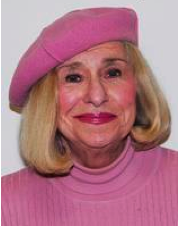
And finally…We all know the IRP is a special place. One of the most spectacular gifts we receive as members is the opportunity to attend some of the world’s greatest performances of music, dance and theater held in universally famed venues. Over the years thousands of tickets have been given to us by the tireless lady in the beret, Evelyn Montague.

Evelyn, thank you. This edition of VOICES is dedicated to you.

Fellow classmates, have a great reading and viewing experience.

You’re one click away: www.irpvoicesonline.com.

Sincerely,
Tom Ashley
Publisher

Letter from The Director

Letter from the Director

Greetings:

For fifty years, the Institute for Retired Professionals has been an integral part of the New School and for forty-five of those years, IRP members have been encouraged to explore their unique ideas, skills and talents. Our online publication, IRP Voices, is a magazine of arts and letters edited and published by and for the students. It showcases a broad range of prose, poetry and photography. Seventy-five IRP members have impressive work displayed here.

We urge you to celebrate everyone’s creative efforts and applaud the many people and many hours it took to bring this exciting Voices issue to fruition.

Michael Markowitz
Director

Dunes

by Harriet Sohmers Zwerling

You turn left at Race Point
onto the blacktop road
that rolls through the dunes
with their female curves
like breasts and thighs of
silky sand.

Small, arthritic-looking
pines dot them,
breathing resin and salt.
Below, the restless sea tosses
ribbons of foam against the shore.

At night the dunes mimic the moon,
those dark craters,
and lying among them, we fill
our eyes with stars.

Harriet Sohmers Zwerling  is the author of a story collection, Notes of a Nude Model and other pieces. Her new book, entitled Abroad: an expatriate’s diary, based on the journals she kept while living in Paris during the Fifties, is due out in Spring.


Artemis

by Harriet Sohmers Zwerling

She came first, the girl, and helped deliver
Apollo, her twin.
Both were beautiful, as were all Zeus’ bastards.

Poor Mama Leto, hounded by Hera, homeless,
wandered the islands with her children.
Still, her babies grew into gods;
he of the sun; she the moon.

A wild girl, fierce, contradictory,
she was a huntress and loved animals, a killer of men and
protector of women in labor, guardian of virgin girls.
Tall and strong; she loved forests and beasts,
lived with deer and dogs and had a female militia
that followed her orders.

The occasional encounter with a male was often fatal
for him. A proud hunter, Aktaion, accidentally
saw her naked and was punished for it.
With poetic flair, she turned him into a stag
and had his own dogs tear him to pieces.

Her hunting pal, Orion the Titan,
presumed too much. They say her twin,
Apollo, jealously killed him.

Created by the perverse Greeks,
she is, of course, immortal.
Could I have danced with her once at the Dutchess,
on Sheridan Square?

Harriet Sohmers Zwerling  is the author of a story collection, Notes of a Nude Model and other pieces. Her new book, entitled Abroad: an expatriate’s diary, based on the journals she kept while living in Paris during the Fifties, is due out in Spring.

Concord Grapes

by Nancy Yates

On the hard wooden bench , we were sitting
side by side, waiting
for the downtown R train.
He turned toward me and stared
at the unwashed Concord grapes I was polishing,
one by one, and popping into my mouth –
fragrant fresh from the Farmer’s Market
at Union Square—
the first of the brief fall season.

A slight young man, with red cap, focused his soft brown eyes
in my direction.
I smiled a bit in recognition and he smiled a bit back.
And I waited for the right moment, waited some more and waited still,
until the R train rumbled towards us —too late now—a small heaviness.
I stood and stepped toward the train, then turned back to him,
“These are for you!” I thrust a big bunch of grapes into his hands
and ran. From behind closed subway doors, I saw his wide smile.

Nancy Yates took a poetry class some time ago at JCC and thought it would be fun to send a few poems to Voices for consideration. She now considers herself published.

Sleeping Beauty Meets the Frog Prince

by Nancy Yates

Suspended in that time and place,
in sombre dark and heavy space,
Beauty sleeps and waits for her bright
Prince to come along,
to give her back her light, her life,
she waits to be transformed,
to be his Queenly wife.

Then one fine day, the Prince appears
and Beauty opens eyes and smiles
and knows
he’s there for her,
an end to all her sleepy woes.
He leans to kiss her upturned nose
but sneezes loud and undergoes
a curious change of heart and mind.

He stares and blurts (he’s quite unkind)
“Your makeup’s worn,
your silk dress torn,
your glass case musty
the castle dusty as can be
you’ve put on weight, it’s clear to see.

No doubt, just lying around for centuries
has dimmed your suitability
to be the kind of lovely spouse
who’d serve and keep a tidy house.”

While she’s astonished and less groggy,
her suitor looks more froggy
every moment she hears him speak.

But now she’s done with prince and frog.
She’ll seek, with her retriever dog,
a magic portal to the Mortal
World, and find
a brand of man
who’s princely on command.

Nancy Yates took a poetry class some time ago at JCC and thought it would be fun to send a few poems to Voices for consideration. She now considers herself published.